Bio

Short bio
- Name
- Sean Blanchfield
- Role
- CEO and Co-Founder, Jentic
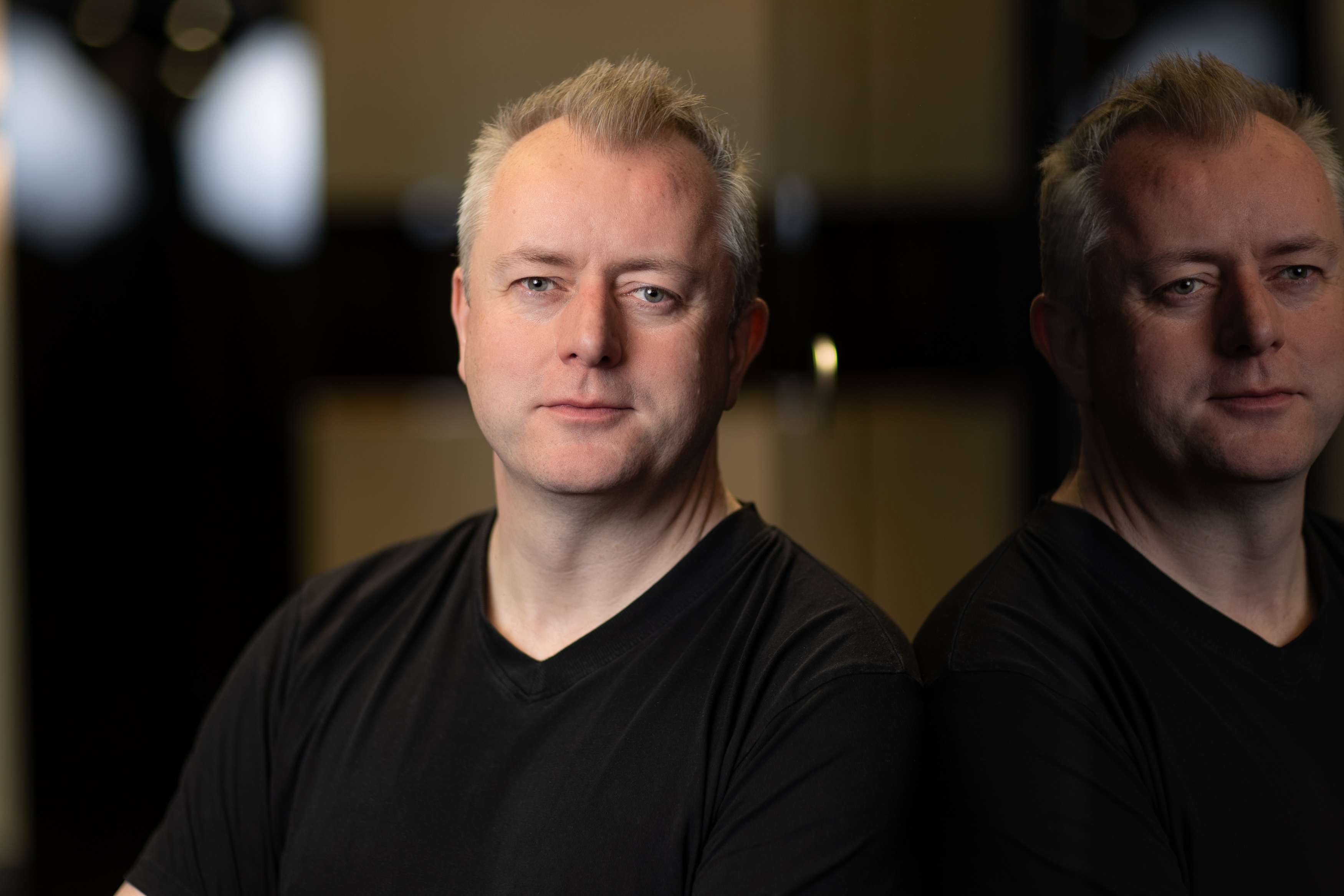
Sean is CEO and co-founder of Jentic, building sovereign AI operating stacks for enterprises. He is a serial entrepreneur and engineer, previously known for Demonware, designing and operating the multiplayer technology that powers Call of Duty (acquired by Activision Blizzard). Sean previously led Ireland's startup accelerator programme, and was an AI adviser to the Irish government.
My story
I am a technologist and entrepreneur from Dublin, Ireland. I am currently CEO and co-founder of Jentic, building sovereign AI agent infrastructure for businesses.
My most recent exit was PageFair, where I was CEO and co-founder, helping web publishers stop revenue loss due to adblocking. PageFair was acquired by Blockthrough in late 2018. Prior to PageFair, I was best known as as the technical co-founder of Demonware, which pioneered online technology for the world's leading video games, including Call of Duty and Guitar Hero, and which was acquired by Activision in 2007. I also founded and co-organize Techpreneurs, an invite-only monthly chatham-house-rule meetup for Irish technology founders, which still runs today and is an amazing resource (for those are invited to join).
I was an EIR at the National Digital Research Centre (NDRC) at Dogpatch Labs in Ireland from 2023 - 2024, and ran an accelerator cohort there in 2024.
I also had the honour of being a member of the Irish government's AI Advisory Council from 2024-2026, taking a particular interest in the question of AI sovereignty in all its definitions, from cultural to economic.

I've been starting companies since I was 19. I started by selling websites door-to-door in 1997 in a business park in south west dublin. As an undergrad I co-founded Phorest (initially specializing in early mobile messaging in 2000), which later gave birth to Demonware, which I co-founded with Dylan Collins in 2003.
I had spent 2.5 years doing a PhD in distributed systems in Trinity College Dublin (trying to build something that today we would recognise as a dark net), but I dropped out as soon as we raised seed funding for Demonware (no easy feat in 2003 in Ireland). In Demonware, we specialized in online video gaming. We set out to build a peer-to-peer video games network stack to power massively multiplayer games. We had the shit kicked out of that idea by potential customers very early, and instead built a series of networking solutions for specific genres of games, solving real-time internet communications, security, NAT punching, voice, and more. Then we started building hosted infrastructure to handle matchmaking, leadersboards and everything that evolved into modern multiplayer. I had an amazing time hiring geniuses, inventing new technology to solve hard problems, throwing wild parties on double-decker buses in LA, and getting to work with the best companies in the business on popular Playstation and Xbox games like Guitar Hero and Call of Duty. By the time I moved on, we had hundreds of millions of player accounts, and were handling millions of concurrent players.
DemonWare was acquired by Activision Blizzard in 2007, and I remained on for 2 years as a VP of Demonware as it became the core online technology platform of Activision. In time, Demonware grew to hundreds of talented staff in Dublin, Vancouver, Montreal and Shanghai, and operating the most successful video game franchise of all time, Call of Duty. This is a wonderful culmination of our original vision: we started with a conviction that multiplayer games we loved like Counter Strike were going to go mainstream. This was borne out in Counter Strike's spiritual descendant, Call of Duty, which not only runs on top of DemonWare, but is a multiplayer game first and a single player game second.

After DemonWare I found myself in the Zynga era of web-based social gaming, a continuation of the multiplayer arc, distilled down and gone mainstream. With Brian McDonnell I re-engineered and ran Utopia, a massively multiplayer team-based web strategy game. I believe it to be oldest running game of its kind, with an extremely dedicated base of users, many of whom have been playing since the game's launch in the late 1990s. Utopia was acquired by MUGA Gaming in 2017.
I was consulting CTO in Jolt Online in 2010, after its acquisition by GameStop, and I rapidly built a dev team, helped launch a few new social games, and built an interesting gamified internal sales campaign platform that was used by about 30 thousand staff.
In 2011 I co-founded Front Square and built a multiplayer social game and gamified platform to teach the principles of Lean Six Sigma in an enterprise setting. This scalably solved a very difficult education-delivery problem, but was killed by a long sales cycle.
In 2012 Brian McDonnell and I regrouped as Scale Front, a venture lab in which we tried to parallelize the Lean Startup method. We filtered 50 business ideas down to 5 product launches, and produced 2 businesses. One of these businesses, PageFair, soon became our core focus.
We built PageFair into an internationally-recognised brand in digital media, researching the growth of adblocking, publishing widely-anticipated annual adblocking reports, placing the challenge of advertising sustainability on top of the online media industry's agenda, and worked with hundreds of leading online newspapers, magazines and other websites to recover lost revenue through high-quality non-blockable ad technology. In November 2018, PageFair was acquired by Blockthrough Inc.
Working with me
If it looks like we're going to collaborate, here is a guide to the way I work, based on what I think is true, moderated by several corrections from former colleagues and co-founders.
Read How I work